Waterproof bath seal at a glance
Generally speaking, the bathroom waterproofing is the process of protecting your bathroom and wet areas using various methods. Suitable sealing measures ensure that water cannot penetrate the building structure.
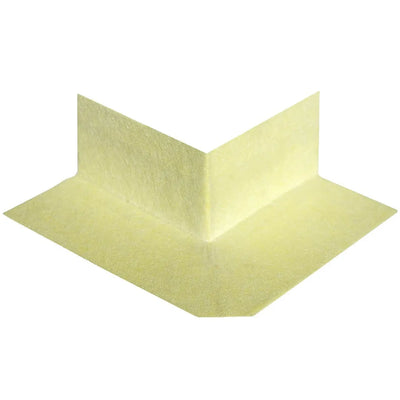
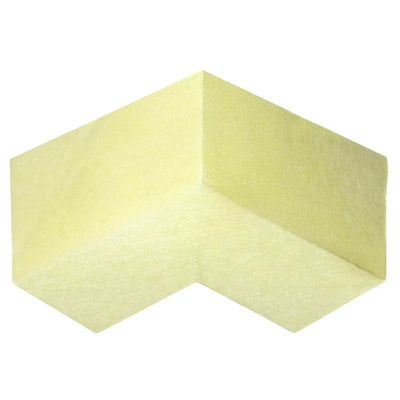
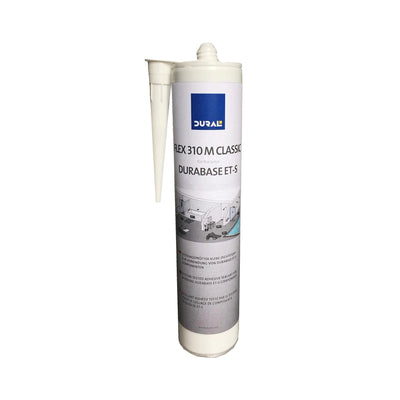
In connection with tiles or other slab coverings, one speaks of the so-called composite waterproofing in the bathroom. This always consists of several layers and components such as tile adhesive, sealing mats or liquid foil as well as accessories such as sealing tapes and cuffs.
Function of the waterproof seal
- The bathroom waterproofing prevents moisture from penetrating walls and floors
- Mold formation in the masonry is avoided
- The service life of the building structure is increased
- Mat systems also have insulating properties
- Adjacent rooms are protected from moisture damage
- Sealing mats provide a secure foundation for tiles and other floor coverings.
In the blog "Sealing the bathroom properly: step-by-step instructions" you will find further information on this topic.
Different methods for waterproofing seal
One can distinguish between liquid waterproofing for the bathroom and mat systems consisting of sealing membranes. Each method has different advantages. To help you decide which is best for you, here are some characteristics of the methods.
Sealing the bathroom with sealing mats
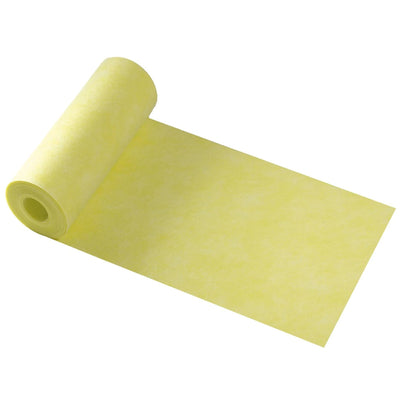
Sealing membranes are usually made of polyethylene foil and are attached to the wall with tile adhesive. The processing is a little more complex, but the tiles can be installed immediately after laying. A big advantage of sealing mats is the high tear resistance, which ensures long-term sealing. Thanks to the matching molded parts, they are also easy to adapt to different room shapes and corners.
Self-adhesive waterproof seal
A special and quite new form of sealing membranes has a self-adhesive back. This type of sealing brings with it a number of advantages that should not be neglected when deciding which method is best for you. First of all, there is the time factor. As no glue has to be applied and no drying times have to be taken into account as with liquid foil, the working time is reduced massively. Last but not least, laying self-adhesive sealing membranes causes less dirt than with the other methods. You can read more about this in the blog post "Self-adhesive waterproofing in the bathroom" for further information.
We have listed the complete self-adhesive sealing system separately in the corresponding category.
Liquid sealing with liquid foil
Liquid foil is applied with a brush, which makes it very easy to use. The uncomplicated processing makes it suitable for areas that are difficult to access. It is also ideal for small repairs or additions, as it is flexible and easy to apply. A major disadvantage compared to mat systems is the long drying time, which can take up to 24 hours. Only then can you start tiling.
Sealing with cementitious sealing slurry
Sealing slurry is a mineral-based waterproofing that is delivered as a powder and mixed with water on site. It is applied in at least two coats using a brush, roller or trowel and forms a robust, waterproof coating once cured. The flexible variant in particular is crack-bridging and approved for water impact classes up to W3-I. Sealing slurry is not only used in bathrooms and showers, but also in swimming pools, cellars and outdoor areas – making it ideal if you are planning a fully mineral-based system build-up. As with liquid foil, however, you do need to factor in drying times: depending on the product, several hours up to a full day are required between coats.
The four methods in direct comparison
The following overview compares all four methods and helps you choose the right solution for your project.
| Criterion |
Self-adhesive sealing membrane |
Sealing membrane with tile adhesive |
Liquid foil |
Sealing slurry |
| Application |
Peel off the protective film, press on – dry and low-dust |
Apply tile adhesive with a 4×4 mm notched trowel, lay the membrane |
Apply in 2 coats (different colors per DIN 18534) by brush or roller |
Mix powder with water, apply in 2 coats with brush or trowel |
| Waiting times |
None – continue working immediately |
Only observe the adhesive's open time, then ready to tile |
Approx. 3 hours per coat, approx. 24 hours until tileable |
Approx. 3–24 hours per coat, usually ready to cover after 1 day |
| Water impact classes (DIN 18534) |
W0-I to W3-I (ETA-22/0133) |
W0-I to W3-I (ETA-20/0838) |
Typically W0-I to W2-I wall / W0-I to W1-I floor |
Depending on product, W0-I to W3-I |
| Layer thickness reliability |
Factory-defined thickness of 0.8 mm – always uniform |
Factory-defined thickness of 0.7 mm – always uniform |
Depends on application – risk of thin spots |
Depends on application – experience required |
| Suitable substrates |
Wood, concrete, screed, plaster, plastics, stainless steel, glass, enamel |
All common mineral substrates after priming |
Mineral substrates after priming |
Primarily mineral substrates (concrete, masonry, screed) |
| Site handling |
Dust- and dirt-free, no mixing, minimal waste |
Standard tile adhesive application |
Bucket, roller, brush – wet application |
Mixing with water, dust development when opening the bag |
| Additional benefits |
11 dB sound reduction, also ideal for drywall construction |
Extensive range of system accessories for all detail solutions |
Seamless sealing, well-suited for complex geometries |
Robust and mineral-based, also suitable for swimming pools, cellars and outdoor areas |
| Ideal for |
Renovation, drywall construction, tight schedules, DIY and professionals |
Projects with standard application and maximum water exposure |
Small areas, detail sections, retrofitting |
Bathrooms and showers with mineral system build-up, swimming pools, cellars, outdoor areas |
Waterproof bath seal according to DIN 18534
In DIN 18534 the sealing of interior spaces is described. Only if all points are fulfilled, the sealing method can be called standardized. The various points include:
- Classification into water impact classes (W0-I to W3-I.
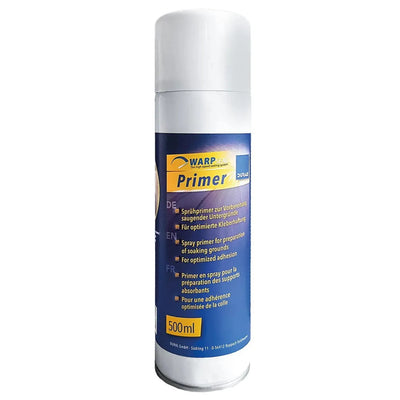
- Sealing materials must be tested and approved. Accessories such as sealing tapes or sleeves must be used in a system-specific manner.
- The waterproofing layer must be at least two layers.
- Wall seals must extend 5 cm above the floor. For floor-level showers, at least 20 cm above the highest tap.
- Shower trays and bathtubs must be specially protected by special tub sealing tapes
- Floor drains and channels must have a flange width of 50 mm
- The sealing must be continued behind door frames and connecting joints
Tile composite sealing in the bathroom - our systems
With the self adhesive shower waterproof membrane and the associated accessories, you will find an exceptional sealing system of the highest quality with us. It is particularly worth mentioning that all components are self-adhesive, which speeds up the processing considerably. Standard-compliant sealing in record time.
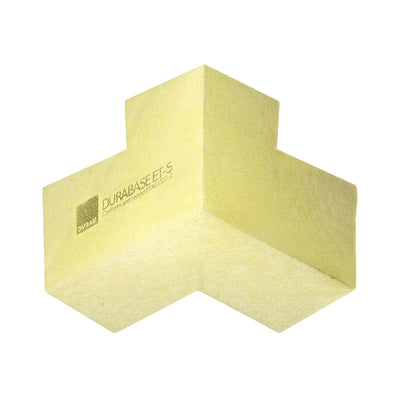
The shower waterproofing membrane ET-S with matching accessories is another mat system for bathroom sealing that you can find with us. This also ensures sealing in accordance with DIN18534.
You can also find our complete composite sealing systems separately in the category of the same name.